
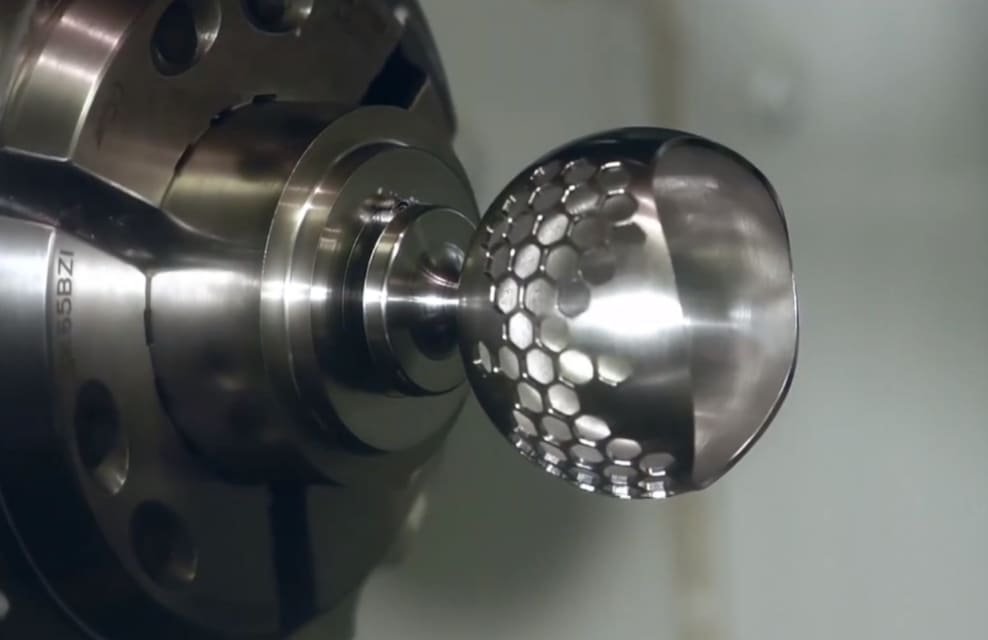
CNC machining solutions for ultra-thin wall components represent one of the most advanced and technically demanding areas of modern manufacturing, where precision, stability, and material behavior must be controlled at an extraordinary level. Ultra-thin wall components are widely used in aerospace structures, medical devices, electronics housings, automotive lightweight systems, robotics, and high-performance industrial equipment. These parts are designed with extremely low wall thicknesses to reduce weight, improve thermal efficiency, and optimize mechanical performance, yet they must still maintain exceptional dimensional accuracy, rigidity, and surface quality. The defining challenge in thin-wall CNC machining is that the material itself becomes inherently unstable during cutting. Even minimal cutting forces can cause deflection, vibration, surface distortion, or permanent deformation. Unlike conventional machining, where mass and rigidity help absorb energy, thin-wall components amplify cutting forces and transfer them directly into dimensional inaccuracies. As advanced engineering trends continue to push for lighter, smaller, and more efficient components, the demand for reliable CNC machining solutions for ultra-thin wall geometries continues to grow globally. Success in this field depends on an integrated strategy that combines specialized tooling, rigid CNC platforms, adaptive toolpaths, intelligent fixturing, thermal control, and real-time process monitoring.
One of the most critical foundations of successful CNC machining for ultra-thin wall components lies in cutting tool selection and micro-geometry optimization. Thin walls require tools that can remove material with the lowest possible cutting forces while maintaining sharpness, stability, and predictable wear behavior. Solid carbide tools with ultra-fine grain structures dominate this application due to their stiffness and edge retention. Advanced coatings such as aluminum titanium nitride, titanium silicon nitride, and nanocomposite multilayer coatings further enhance thermal resistance, reduce friction, and improve chip evacuation efficiency. Tool geometry plays an equally decisive role, as high positive rake angles reduce cutting pressure, while optimized helix angles improve chip flow and minimize vibration. In thin-wall machining, the goal is not aggressive material removal but controlled, low-pressure cutting that preserves wall integrity throughout the process. Tool holding systems also become critical performance factors. Hydraulic chucks and shrink-fit holders are preferred because they ensure superior concentricity and damping, which reduces runout-induced wall fluctuation and prevents micro-chatter at high spindle speeds. Even microscopic runout errors that would be negligible in conventional machining can result in visible wall waviness, thickness inconsistency, or structural weakening in ultra-thin components. As a result, tool condition monitoring, preset tool measurement, and predictive tool replacement strategies are essential for maintaining consistent thin-wall quality across production cycles.
Machine tool rigidity and dynamic stability form the mechanical backbone of thin-wall CNC machining success. Ultra-thin components do not tolerate vibration, thermal drift, or axis backlash, making high-end CNC platforms a necessity rather than a luxury. Modern thin-wall machining centers are engineered with reinforced machine frames, high-precision linear guide systems, and vibration-dampening materials such as polymer concrete or heavily ribbed cast iron structures. High-speed spindles with balanced rotors and hybrid or ceramic bearings deliver the rotational stability required to maintain low cutting forces at elevated surface speeds. Axis drive systems with linear motors and ultra-high-resolution feedback encoders allow precise micro-positioning even under fluctuating cutting loads. Thermal stability also becomes a critical control variable, as thin walls are highly sensitive to thermal expansion and contraction. Prolonged cutting cycles can generate localized heat that distorts wall geometry in real time. To counter this, advanced CNC machines integrate thermal compensation software, coolant temperature regulation, and fully enclosed machining environments that stabilize ambient conditions. Without this level of mechanical and thermal control, thin-wall geometries become highly unpredictable, resulting in unacceptable scrap rates and inconsistent part quality in high-value production environments.
Workholding and fixturing strategies represent one of the most overlooked yet decisive success factors in CNC machining for ultra-thin wall components. In conventional machining, clamping force is often increased to improve part stability. In thin-wall machining, excessive clamping force itself becomes a major source of distortion. The challenge lies in restraining the workpiece securely without inducing stress that alters its geometry during or after machining. Specialized vacuum fixtures, low-pressure hydraulic clamping systems, and custom soft jaws with distributed force zones are widely used to support thin walls evenly across their surface. In many high-precision applications, sacrificial supports, temporary backfilling with low-melting-point alloys, or removable structural ribs are incorporated into the part design itself to enhance rigidity during machining. These supports are later removed in secondary operations once the thin-wall geometry is complete. Dynamic fixturing systems that adapt clamping pressure during the machining cycle are also gaining adoption in advanced manufacturing environments. By actively responding to tool engagement, cutting force variations, and vibration feedback, these intelligent fixtures help maintain geometric stability throughout the cutting process. Proper fixturing not only prevents deformation and chatter but also improves tool life, surface finish consistency, and overall dimensional repeatability of ultra-thin wall components.
Toolpath strategy and CNC programming methodology play a defining role in thin-wall machining performance, often determining whether a part is manufacturable at all. Conventional full-width passes and aggressive step-down strategies generate excessive lateral forces that easily deflect thin walls beyond tolerance limits. Advanced CAM software enables high-efficiency, low-force machining strategies such as adaptive clearing, constant engagement milling, and trochoidal toolpaths specifically optimized for thin structures. These strategies maintain a consistent chip load while minimizing radial cutting pressure on the wall surface. Progressive roughing with controlled stock allowance allows material to be removed gradually without inducing sudden stress into the part. Semi-finishing operations are used to equalize residual stress distribution before final finishing passes are applied at extremely light cutting conditions. Finishing toolpaths are carefully oriented to direct cutting forces into the most structurally supported areas of the workpiece whenever possible. Multi-axis CNC machining further enhances thin-wall stability by allowing optimal tool orientation that reduces effective cutting force vectors. Entry and exit moves are equally important, as abrupt tool engagement can shock thin walls into vibration or permanent deformation. Smooth ramping, helical entry techniques, and controlled lead-in and lead-out paths are essential for preserving surface quality and dimensional integrity. Combined with real-time spindle load monitoring and adaptive feed rate control, these advanced toolpath strategies transform thin-wall machining from a high-risk operation into a predictable, repeatable production process.
Material behavior introduces additional complexity into the CNC machining of ultra-thin wall components, as different alloys respond very differently under low-rigidity conditions. Aluminum alloys, widely used for lightweight structures, are prone to chatter and surface smearing if cutting parameters are not precisely controlled. Titanium alloys, while offering excellent strength-to-weight ratios, exhibit high cutting resistance and poor thermal conductivity that intensify heat concentration in thin sections. Stainless steels and nickel-based superalloys further amplify cutting force and thermal load challenges, significantly increasing the risk of wall distortion and surface tearing. Polymer-based and composite thin-wall components introduce their own challenges related to elastic recovery, heat sensitivity, and fiber pullout. To manage these variations, cutting parameters must be precisely customized to each material type, including spindle speed, feed rate, depth of cut, and coolant delivery strategy. High-pressure through-spindle coolant systems play a vital role in stabilizing cutting temperatures and evacuating chips from confined thin-wall cavities. In the most demanding applications, cryogenic cooling and minimum quantity lubrication are used to minimize heat input while preserving surface integrity. Material-specific tool coatings and edge preparations further enhance cutting edge performance under low-force conditions. Without proper material-adaptive machining strategies, thin-wall components quickly become victims of warping, residual stress buildup, micro-cracking, and dimensional drift that compromise both functional performance and long-term reliability.
Surface integrity, wall thickness consistency, and dimensional stability represent the ultimate quality benchmarks for CNC machining of ultra-thin wall components. In aerospace and medical industries, thin-wall geometries often serve as pressure boundaries, load-bearing structures, or interfaces with dynamic biological or mechanical systems. Even minor deviations in wall thickness can dramatically affect fatigue life, thermal efficiency, and structural safety. Achieving exceptional surface quality at such low structural rigidity requires ultra-light finishing passes, stabilized spindle speeds, and continuous tool condition control. Tool wear becomes particularly dangerous in finishing stages, as even microscopic edge degradation can produce visible surface tearing or local wall thinning that exceeds tolerance limits. In-process probing systems are commonly used to measure wall thickness and geometric accuracy at multiple stages of the machining cycle, allowing real-time offset compensation before finishing operations are completed. Post-process inspection often involves high-resolution coordinate measuring machines, laser scanning systems, and ultrasonic thickness measurement to verify internal and external wall geometries. In regulated industries, full digital traceability of machining parameters, tool usage history, and inspection results is required to meet global quality certification standards. Thin-wall CNC machining is therefore not simply a metal cutting process, but a tightly controlled precision manufacturing system where quality assurance is fully embedded into every stage of production.
The future of CNC machining solutions for ultra-thin wall components is being shaped by rapid advances in artificial intelligence, digital simulation, smart automation, and closed-loop manufacturing systems. AI-driven machining platforms are now capable of analyzing real-time cutting force data, vibration signatures, temperature distribution, and tool wear patterns to dynamically adjust feed rates, spindle speeds, and depth of cut during thin-wall operations. Digital twins of thin-wall machining processes enable engineers to simulate material behavior, deflection patterns, residual stress distribution, and thermal distortion before physical production begins, dramatically reducing development time and scrap rates. Robotic automation and flexible manufacturing cells allow continuous unattended machining of thin-wall components with exceptional consistency across large production volumes. As industries continue to pursue extreme lightweighting, miniaturization, and structural optimization, ultra-thin wall geometries will become even more central to next-generation product design. Manufacturers that invest in advanced CNC platforms, intelligent toolpath strategies, precision fixturing, material-specific cutting technologies, and data-driven quality control will secure a decisive competitive advantage in this highly demanding production space. CNC machining for ultra-thin wall components is no longer defined by traditional cutting power alone, but by precision engineering, digital intelligence, and uncompromising control over mechanical, thermal, and material variables at every stage of the manufacturing process.