
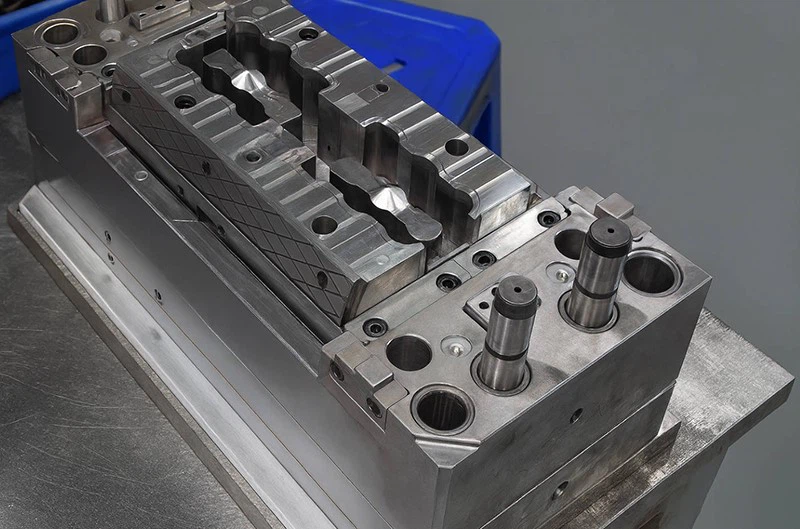
CNC-based rapid mold fabrication has transformed the injection molding industry by enabling manufacturers to accelerate development cycles, reduce tooling costs, and create production-ready molds with exceptional dimensional accuracy. As industries race toward faster product launches and high-performance components, CNC machining has become the preferred method for producing prototype molds, bridge tooling, and even short-run production molds. Unlike traditional mold-making, which often requires extensive manual craftsmanship and long lead times, CNC-based workflows leverage high-speed machining, 5-axis tool control, and precision surface finishing to deliver molds in a fraction of the time. Modern search engines increasingly reward content that blends technical depth with practical insights, making this topic essential for engineers, production managers, and manufacturers seeking to optimize operations. By integrating CNC technology into mold fabrication, companies can achieve superior tooling performance while reducing time-to-market—an advantage that is critical in today’s highly competitive manufacturing landscape.
One of the primary advantages of CNC-based rapid mold fabrication is the dramatic improvement in speed and efficiency. Traditional mold-making can take weeks or even months due to manual EDM work, bench finishing, and iterative adjustments. CNC machining streamlines these steps by allowing tool paths to be precisely defined using modern CAD/CAM software. High-speed steel and carbide end mills, ball-nose cutters, and specialty cutters can remove material rapidly while maintaining tight tolerances. 3-axis, 4-axis, and 5-axis CNC milling machines provide unmatched flexibility in shaping mold cavities, insert pockets, cooling channels, and complex parting lines. Rapid toolpath generation enables immediate iteration: if a design requires modification, engineers can simply update the CAD model and regenerate tool paths without rebuilding the mold from scratch. For injection molding companies facing short product cycles—such as electronics, medical devices, and consumer goods—this level of agility ensures they can respond quickly to market demand. By reducing lead time from weeks to days, CNC machining enables a new era of fast, scalable mold development.
Material versatility is another key strength of CNC-based rapid mold fabrication. While traditional steel molds are essential for long-run production, CNC machining allows manufacturers to create prototype and short-run molds using a wide range of materials—from aluminum and pre-hardened steel to copper alloys, composites, and hybrid materials. Aluminum has become one of the most popular materials for rapid molds due to its excellent machinability, thermal conductivity, and ability to support high-quality part production with minimal polishing. CNC machines can cut aluminum at high feed rates without sacrificing surface quality, making it ideal for molds requiring detailed texture or sharp-edged features. For applications demanding superior strength and wear resistance, CNC machining can efficiently process tool steels such as P20, H13, or S7. Copper alloys such as beryllium copper are also frequently CNC-machined for inserts and cores requiring superior heat transfer. This flexibility in material selection allows manufacturers to tailor mold performance to the demands of the final product—whether it requires durability, thermal efficiency, or cost-effective prototyping.
The precision capabilities of CNC machining play an essential role in producing high-quality molds for injection molding. Mold components—such as cores, cavities, gates, runners, sliders, and ejector systems—must be machined to exact tolerances to ensure proper alignment, part repeatability, and efficient cooling. Even small deviations can affect product aesthetics, structural performance, and cycle time. CNC machines equipped with linear encoders, thermal compensation, high-speed spindles, and vibration-reducing systems ensure consistent dimensional accuracy across all features. For complex molds requiring organic shapes or intricate textures, 5-axis CNC machining enables simultaneous movement across multiple planes, ensuring smooth transitions and optimal surface uniformity. Additionally, CNC machining allows for the precise integration of cooling channels, which significantly influences molding cycle times and part quality. By optimizing tool paths to achieve superior surface finish within the mold cavity, manufacturers can minimize or eliminate manual polishing—saving time, reducing labor costs, and preserving near-perfect dimensional control.
CNC machining also plays a pivotal role in the development of rapid tooling solutions that support low-volume and bridge production needs. As companies increasingly embrace iterative design and on-demand manufacturing, the need for durable but cost-effective molds has become more important than ever. CNC-machined rapid molds can produce hundreds or even thousands of parts before requiring refurbishment, making them ideal for pilot runs, functional testing, market validation, and early-stage production. These molds are valuable in industries where designs evolve quickly, as CNC-based workflows allow manufacturers to update tooling in response to feedback without incurring the expensive and time-consuming processes of full-scale mold production. With updated SEO algorithms favoring authoritative, engineering-driven content, it is crucial to highlight how CNC-based rapid tooling bridges the gap between prototyping and mass production. This capability ensures that businesses can ramp up manufacturing seamlessly when demand increases, reducing risk and improving competitiveness in fast-moving markets.
The future of CNC-based rapid mold fabrication is deeply intertwined with advancements in automation, digital integration, and intelligent manufacturing technologies. Modern CAD/CAM systems now include automated toolpath optimization, machining simulation, collision detection, and AI-driven decision support. These tools enhance process reliability while reducing the need for manual intervention. Meanwhile, integrated probing systems allow CNC machines to measure workpieces directly on the machine table, ensuring real-time accuracy and enabling automated adjustments. Additive manufacturing is also merging with CNC machining to create hybrid mold solutions—where 3D-printed conformal cooling channels are integrated with CNC-machined mold bodies. This combination enhances cooling efficiency, improves material flow, and reduces molding cycle time. As Industry 4.0 continues to shape the manufacturing landscape, CNC-based rapid mold fabrication will only grow in relevance. By embracing smarter workflows, integrated software, and advanced machining technologies, manufacturers can deliver high-quality molds faster, more efficiently, and with greater design freedom than ever before.
In conclusion, CNC-based rapid mold fabrication is redefining the standards of speed, precision, and versatility in injection molding. Its ability to produce high-quality molds quickly and economically makes it an indispensable tool for modern manufacturers. Whether used for prototype development, bridge tooling, or short-run production, CNC machining delivers the accuracy, consistency, and performance required to meet today’s demanding product requirements. As machining technologies continue to advance and digital tools become more intelligent, CNC-based mold-making will unlock new levels of efficiency and innovation. Manufacturers who invest in these capabilities will remain ahead of the curve, delivering superior injection-molded products with shorter lead times, lower costs, and exceptional precision—ensuring long-term success in a rapidly evolving global market.