
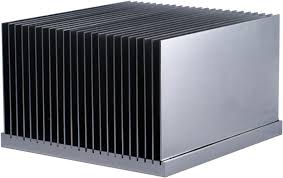
CNC machined heat sinks have become one of the most crucial components in high-performance electronics, especially as modern devices continue to demand greater processing capability, smaller footprints, and improved thermal stability. As power densities rise, electronic systems face aggressive thermal challenges that cannot be resolved by basic stamped or extruded cooling methods alone. CNC machining offers engineers unparalleled freedom in designing heat sinks with complex geometries, micro-fins, and tight tolerances that improve heat conduction and overall cooling efficiency. This level of precision is not only essential for industries such as aerospace, automotive electronics, medical devices, and telecommunications, but it also greatly impacts user experience by extending device lifespan and preventing thermal throttling. In the era of rapid digital transformation, CNC machined heat sinks serve as a foundational technology that empowers manufacturers to maintain high reliability standards in the most demanding applications. When engineered with advanced thermal modeling, multi-material integration, and high-accuracy machining processes, they ensure that even the most compact electronics can sustain peak performance under continuous load.
One of the most compelling advantages of CNC machined heat sinks is their ability to achieve complex fin structures that maximize surface area without compromising structural integrity. Unlike cast or extruded heat sinks that are restricted by die limitations, CNC machining can achieve ultra-thin fin profiles, variable fin spacing, tapered shapes, and intricate multi-directional patterns that significantly increase thermal dissipation. In high-performance electronics—such as gaming GPUs, power modules, RF amplifiers, and industrial controllers—thermal performance is directly tied to processor stability. CNC machining enables the use of high thermal conductivity materials like copper and aerospace-grade aluminum alloys (such as 6061 and 7075), ensuring rapid heat transfer from the heat-generating components to the surrounding environment. Additionally, CNC machining supports hybrid material strategies, where copper is used for rapid conduction at the base and aluminum is used for lightweight convection fins. These complex multi-material assemblies are made possible because CNC machining maintains dimensional accuracy even under the tightest tolerance requirements. This ability to create precision-engineered surfaces also improves contact efficiency with thermal pads, pastes, and vapor chambers, ultimately reducing thermal resistance across the system.
Another major benefit of CNC machined heat sinks is the high repeatability and manufacturing consistency that automated machining centers deliver. High-performance electronics rely on predictable thermal performance across every unit shipped, making process reliability essential. CNC machining ensures each heat sink follows exact specifications, from fin height and spacing to base flatness and overall mass distribution. These factors directly influence airflow dynamics and heat dissipation rates within enclosed electronic assemblies. Moreover, CNC machining supports custom prototyping and rapid iteration for engineering teams that must optimize designs based on real-world thermal test data. Whether the application involves mission-critical aerospace communication modules, military-grade electronics, or next-generation data center hardware, CNC machined heat sinks guarantee the reliability required for long-term operation in volatile thermal environments. Because CNC machining allows for continuous design refinement, manufacturers can achieve optimal thermal performance without being constrained by tooling costs or large-volume minimum orders, making the technology ideal for both low-volume specialty electronics and large-scale production.
In addition to enhanced precision, CNC machined heat sinks offer superior adaptability when integrating additional cooling technologies such as vapor chambers, heat pipes, and liquid cooling loops. Modern electronic devices often require hybrid thermal solutions to meet increasingly intense power demands. CNC machining allows engineers to incorporate channels, slots, and mounting surfaces directly into the heat sink body, enabling seamless integration of advanced cooling components. For example, liquid-cooled plates can be machined to micron-level tolerances to support high-pressure fluid channels, while heat pipe grooves can be designed with precise curvature to maximize thermal conduction efficiency. This integration is especially beneficial in industries like electric vehicles, aerospace avionics, 5G telecommunications, and high-frequency radar systems, where even slight temperature fluctuations can affect system performance. CNC machining also supports the use of anisotropic geometries that improve airflow management within compact enclosures, helping to guide airflow more effectively through heatsink fins. As devices grow more powerful and miniaturized, the flexibility to machine tailored cooling features directly into the heat sink becomes a crucial element of thermal design strategy.
Furthermore, CNC machined heat sinks play a strategic role in enabling long-term durability for electronics exposed to harsh environments. Devices operating in outdoor, military, medical, or industrial settings must withstand extreme temperatures, vibrations, and humidity without losing thermal efficiency or mechanical integrity. CNC machining ensures the heat sink structure remains robust and stable, with clean edges, smooth internal surfaces, and precise mounting points that reduce stress during assembly. The machining process also supports protective surface treatments such as anodizing, nickel plating, chromate conversion, or PTFE coatings, each offering enhanced resistance against corrosion, oxidation, and chemical exposure. These coatings can also improve emissivity, further optimizing thermal performance. The combination of premium materials, precision machining, and advanced finishing allows CNC machined heat sinks to remain operational for years without degradation, even in environments where conventional heat sinks fail prematurely. For industries dependent on uninterrupted electronic performance, this durability translates into reduced maintenance costs, increased reliability, and greater operational efficiency across entire product lifecycles.
Finally, CNC machined heat sinks contribute significantly to the scalability of modern electronics by supporting both innovation and manufacturing efficiency. As industries migrate toward higher power densities, AI-driven hardware, edge computing devices, and compact IoT modules, the demand for custom cooling solutions will only intensify. CNC machining provides the essential link between concept and production, enabling thermal engineers to experiment with new geometries, evaluate prototypes quickly, and transition successful designs into consistent manufacturing workflows. Because CNC systems utilize advanced automation, multi-axis machining, CAD/CAM integration, and real-time quality monitoring, manufacturers can achieve high throughput without sacrificing precision. This ensures that high-performance electronics can meet thermal compliance standards while maintaining sleek form factors and competitive performance benchmarks. As the global electronics industry evolves, CNC machined heat sinks will continue to support innovation by delivering advanced thermal solutions that enhance processing power, system longevity, and user experience across a wide range of technology sectors.