
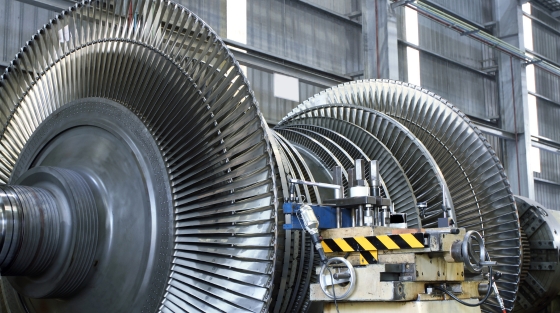
In the aerospace industry, precision is not merely a requirement—it is a non-negotiable foundation for flight safety, fuel efficiency, and long-term engine reliability. Among all components inside a jet engine, turbine blades represent one of the most complex engineering challenges due to their aerodynamic shape, extreme operating temperatures, and demanding structural requirements. CNC machining has become the central technology enabling the production of turbine blades with perfect consistency and near-zero tolerance deviation. Turbine blade profiling involves the precision shaping of airfoil surfaces, intricate cooling channels, root geometry, tip contours, and aerodynamic curves that must perform flawlessly under intense thermal stress and rotational forces. With CNC machining, aerospace manufacturers are able to achieve micron-level accuracy, repeatable quality, and highly efficient production cycles for even the most advanced turbine blade designs. As aircraft engines continue evolving toward higher efficiency and lower emissions, CNC machining has grown more advanced—integrating 5-axis movement, adaptive toolpath strategies, and real-time feedback systems to meet the rising complexity of modern aerospace turbine blade profiling.
One of the defining features of CNC machining in turbine blade production is the use of multi-axis machining, particularly 5-axis CNC mills that allow tools to move across complex surfaces with unparalleled precision. Turbine blades are rarely simple components; their surfaces twist, taper, and curve in ways designed to optimize airflow at various rotational speeds. These geometries demand continuous tool engagement at different angles, something only possible with full 5-axis movement. Modern CNC machines utilize optimized toolpaths generated through advanced CAM software, allowing simultaneous multi-axis movement to prevent surface scalloping, eliminate abrupt directional changes, and ensure smooth aerodynamic contours. In machining superalloys such as Inconel, titanium, cobalt alloys, and nickel-based materials often used in turbine blade manufacturing, tool deflection, heat buildup, and surface hardening can severely affect quality. CNC systems apply intelligent feed-rate adaptation, thermal compensation, and high-pressure coolant delivery to maintain safe cutting temperatures and avoid micro-cracking. In addition, adaptive milling strategies help maintain consistent chip loads and reduce the stress on both the tool and the material. This sophisticated level of machining is critical for maintaining the precise airfoil profile that determines a turbine blade’s aerodynamic performance and fuel efficiency.
Beyond shaping aerodynamic surfaces, CNC machining plays a vital role in producing the functional features that allow turbine blades to withstand extreme temperatures and mechanical stress. Modern turbine blades include internal cooling channels, film cooling holes, root mounting structures, and shroud contours—all essential for engine performance. Cooling holes, for example, must be machined with extreme accuracy to ensure uniform airflow distribution across the blade surface. Techniques such as CNC-guided electrical discharge machining (EDM), high-precision gun drilling, and laser-assisted drilling are often integrated into automated workflows to create these precise geometries. Meanwhile, the fir-tree root design—which locks the blade securely into the turbine disk—requires exceptional dimensional accuracy. CNC grinding and finishing processes ensure that these root profiles mate perfectly with the disk slots, preventing micro-gaps that could lead to vibration, wear, or catastrophic failure. Ultrasonic-assisted machining is also increasingly used to enhance material removal from superhard alloys, ensuring clean cuts and longer tool life. Each of these intricate processes demonstrates how CNC machining contributes not only to shaping turbine blades but also to reinforcing their structural integrity and performance under extreme operating conditions.
CNC machining has also revolutionized the inspection, measurement, and quality verification processes involved in turbine blade profiling. Aerospace tolerances are incredibly tight—often measured in microns—and even the slightest deviation can affect airflow efficiency, engine lifespan, and fuel consumption. To ensure precision, CNC machines integrate in-process probing systems, laser scanners, coordinate measuring machine (CMM) interfaces, and real-time feedback sensors. These systems allow automatic verification of contour accuracy, blade twist, chord length, leading-edge thickness, trailing-edge shape, and platform alignment while machining is still in progress. Any detected deviation triggers immediate compensation, ensuring that the final blade remains within geometric tolerance without requiring manual rework. Additionally, digital twin technology allows engineers to simulate machining processes virtually before physical machining begins. This eliminates guesswork, reduces trial-and-error cycles, and allows production teams to refine toolpath strategies ahead of time. Combined with automated data logging and aerospace-grade inspection protocols, CNC machining ensures that every turbine blade exiting the production line meets the strict reliability standards set by regulatory bodies and engine manufacturers.
The rise of automation-enhanced CNC systems has further accelerated turbine blade manufacturing in terms of both speed and scalability. High-volume aerospace production facilities now integrate CNC machining cells with robotic part handling, automated tool changers, pallet systems, and advanced scheduling software. This creates a streamlined, continuous workflow that minimizes downtime and maximizes productivity. Robots transfer blades between machining stations, inspection modules, and finishing cells with precise repeatability. Automated storage systems manage a large inventory of cutting tools required for machining superalloys, ensuring that worn tools are replaced instantly and that tool data is logged for traceability. With predictive maintenance algorithms monitoring spindle load, cutting forces, vibration levels, and coolant flow, CNC cells can anticipate potential issues before they disrupt production. This fusion of automation and intelligent machining not only enables consistent throughput but also supports the production of increasingly sophisticated blade geometries that demand high precision at every stage. As aerospace engines become more advanced, turbine blade complexity increases, and automation-ready CNC solutions are essential for maintaining both productivity and quality in large-scale manufacturing environments.
Ultimately, CNC machining stands at the heart of turbine blade innovation, serving as the bridge between advanced aerospace engineering and real-world engine performance. Its ability to machine complex superalloys, maintain precise airfoil geometry, integrate internal cooling structures, and verify dimensional accuracy makes it indispensable to modern jet engine production. CNC machining not only improves efficiency, consistency, and accuracy but also supports the development of next-generation turbine blades designed for higher thermal efficiency and reduced fuel consumption. As aerospace companies pursue more sustainable and high-performance propulsion systems, CNC machining will continue evolving—integrating smarter automation, AI-driven optimization, advanced material adaptability, and next-level precision technologies. In a field where every micron matters and every contour influences aerodynamic behavior, CNC machining ensures that turbine blades meet the uncompromising standards required to power the aircraft of tomorrow.